
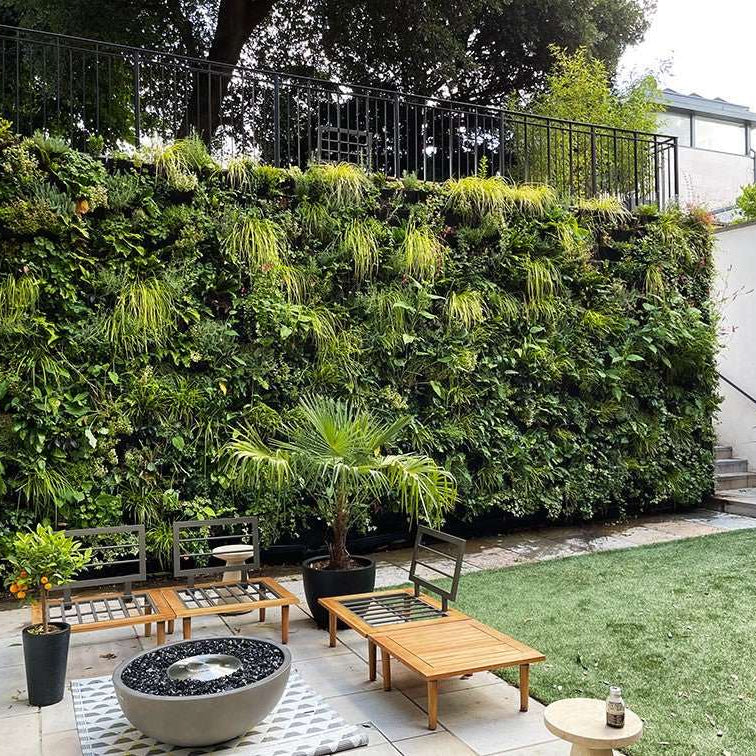

When most people hear the word horticulture, they think of gardens. Some think of flowers, lawns and hanging baskets. Others think of vegetable growing, fruit production, mushroom cultivation, nurseries, parks or garden centres. All of these are part of horticulture. None of them are wrong, yet they tell only part of the story.
Because horticulture has the potential to contribute to the solution to some of the biggest challenges facing Ireland today, from mental health and physical wellbeing to food security, biodiversity loss, climate resilience and the creation of stronger communities.
For too long, horticulture has been viewed primarily through the lens of gardening, retail, leisure and beautification. Those things have value but gardening should not be pigeonholed as simply a genteel pastime for people over fifty with time on their hands. Nor should horticulture be viewed solely as a retail sector or leisure activity.
Viewed differently, it becomes something much bigger.
- A tree planted in the right place can cool streets, provide habitat, improve wellbeing, support biodiversity and strengthen a sense of place.
- A community garden can produce food, reduce isolation, bring people together and create opportunities for learning.
- A school garden can help children understand nature, science and food production while also creating opportunities for teachers, volunteers and older generations to engage with young people in meaningful ways.
These are not unusual examples, they happen every day. What is unusual is that we rarely view them through the wider benefits they create. Instead, we tend to place horticulture in a box marked "gardening" and move on. That may be causing us to overlook one of the most versatile and accessible tools available to us.
The Opportunity We Have Overlooked
Ireland faces significant challenges. We are living through a period of increasing concern around mental health and wellbeing. Healthcare systems are under pressure. Communities are searching for ways to reduce loneliness and strengthen social connection. Questions around food security, biodiversity loss and climate resilience continue to grow in importance. Towns, villages and cities are competing to attract visitors, investment and talent.
These challenges are real and they are complex. No single solution will address them and horticulture is not the complete solution to any of these challenges, it is, however, an overlooked contributor to many of them.
Modern society has become very good at identifying problems. We have departments, agencies, policies, strategies and funding streams dedicated to addressing everything from public health and education to biodiversity, climate adaptation and economic development. Each of these areas is important and each deserves attention. Yet there is a tendency to view them in isolation.
What if some solutions are capable of contributing to many problems at once? That is where horticulture comes into its own. Not because it replaces specialist expertise, nor because it removes the need for investment, policy or public services, but because it has the potential to contribute positively across a remarkable range of societal challenges simultaneously.
Consider a tree-lined street. Most people see trees, some see an environmental benefit, but few stop to consider the full picture.
Those trees help cool urban areas during hot weather. They provide habitat for wildlife. They improve the appearance of a town or city. They encourage people to spend more time outdoors. They contribute to wellbeing and make an area more attractive to residents, visitors and businesses.
One intervention and many outcomes. The same principle applies to a community garden. At first glance, it may appear to be simply a place where people grow food. Look more closely and a different picture begins to emerge. People meet. Friendships form. Knowledge is shared. Food literacy improves. Pollinators benefit. Children learn. Older generations pass on skills and experience. Community pride grows.
This is not unique to horticulture. However, horticulture is unusual in the sheer number of benefits it can generate from relatively simple and accessible interventions.
Why Horticulture Has Been Overlooked
If horticulture can contribute to so many important areas of society, why is it so often absent from conversations about the future?
Part of the answer may be that horticulture's benefits rarely fit neatly into a single category. Its benefits often appear across multiple sectors simultaneously.
- The health benefits are often discussed by healthcare professionals.
- The educational benefits are discussed by teachers and schools.
- The biodiversity benefits are discussed by ecologists.
- The economic benefits are discussed by regeneration specialists and business leaders.
- The climate benefits are discussed by environmental experts.
Each sees part of the picture but few see the whole picture. As a result, horticulture is often viewed through the narrow lens of gardening, leisure, retail or beautification, while many of its wider contributions are attributed elsewhere. This is not because those wider benefits do not exist, it is because they are dispersed across multiple conversations, disciplines and sectors. The result is that horticulture can be hiding in plain sight.
- Its contributions are real.
- Its impacts are measurable.
- Its value is often recognised.
Yet rarely are those contributions viewed collectively. Beyond Gardens is an attempt to reconnect those conversations and reveal the bigger picture they create.
The Horticultural Multiplier Effect
Most investments are judged by a single outcome. A hospital is expected to improve health outcomes. A school is expected to improve educational outcomes. A road is expected to improve transport and connectivity. While each of these investments may create additional benefits, they are generally measured against one primary objective.
Horticulture is different, as its value often lies not in a single outcome, but in the number of outcomes it can create simultaneously. This is what I describe as the Horticultural Multiplier Effect: the principle that a single horticultural intervention can generate multiple social, environmental, health and economic benefits at the same time.
What a single tree might deliver
- Habitat for birds, insects and wildlife
- Carbon storage
- Reduced local temperatures
- Improved air quality
- Intercept rainfall, reduce drainage pressure
- A more attractive public space
- Encourages time outdoors
- Improves wellbeing
- Strengthens sense of place
- Increases attractiveness to residents and visitors
The same principle applies at every scale. A school garden can support education, physical activity, biodiversity, food literacy, social interaction and intergenerational learning. A community orchard can provide food, create habitat, strengthen community ties, support wellbeing and contribute to local identity. A greened town square can improve civic pride, encourage footfall, support local businesses and create a more attractive destination while simultaneously providing environmental benefits.
Viewed individually, each benefit may appear modest, but viewed collectively, the value becomes much greater. When governments, local authorities, organisations and communities invest in horticulture, they are often investing in more than they realise.
“Perhaps instead of throwing money at each challenge individually, we should throw horticulture at all of them.
Resources are limited. Every community faces competing demands and every organisation must decide where to invest its time, effort and money. The Horticultural Multiplier Effect suggests that horticulture deserves greater consideration because it has the potential to contribute to multiple priorities simultaneously. The question is not simply what horticulture costs, the question is what horticulture returns.
Viewed through this lens, horticulture becomes more than gardening, it becomes a practical tool capable of supporting healthier people, stronger communities, richer biodiversity, greater climate resilience and more attractive places.
Seven Challenges. One Overlooked Contributor.
The Horticultural Multiplier Effect is not a theory in search of evidence, the evidence is already all around us. The challenge is that we rarely view it collectively. A healthcare professional may see improved wellbeing. An educator may see a valuable learning environment. An ecologist may see habitat creation. A local authority may see an attractive public space. All of them are correct. What is often missed is that they may be looking at the very same horticultural intervention.
Beyond Gardens identifies seven interconnected areas where horticulture makes a meaningful contribution. These are not separate destinations. They are interconnected parts of a larger picture and each influences the others. Select any theme below to read further.
Mental Health & Wellbeing
Read more →Physical Health
Food & Food Security
Education & Child Development
Biodiversity
Climate Resilience
Placemaking, Regeneration & Economic Value
Individually, each of these areas is significant, but collectively, they reveal something much larger: horticulture is not simply about what we grow, it is about what horticulture helps create. Healthier people. Stronger communities. More resilient places.
The Outcome That Connects Everything
Mental health. Physical health. Food. Education. Biodiversity. Climate resilience. Placemaking. These may appear to be separate issues, they are often discussed separately, they are funded separately, they are measured separately. Yet in reality they are deeply connected.
Improved wellbeing can strengthen communities. Stronger communities can support better health. Healthier environments can support biodiversity. Biodiversity can contribute to resilience. Resilient communities are often better equipped to face future challenges. The connections run in every direction.
This is one of the reasons horticulture is so difficult to place neatly into a single category, because its impacts rarely stop where they begin. The benefits spread, they overlap and they reinforce one another.
That is why Beyond Gardens is not ultimately about plants, nor is it simply about gardens. It is about people, about places, about communities. Plants and gardens are the means through which many of these benefits are delivered but the real outcome is something much larger.
A tree may provide shade. That shade encourages people to spend time outdoors. Time outdoors encourages social interaction. Social interaction strengthens community connection. Community connection contributes to wellbeing. The original intervention remains a tree but the ultimate outcome is much larger.
The same can be said of a community garden, a school growing project, an urban greening initiative, a park. The benefits do not exist in isolation, and that is the Horticultural Multiplier Effect expressed at community scale.
Communities become healthier. People become more connected. Places become more attractive. Local economies become stronger. Environmental resilience improves. Quality of life increases.
Perhaps this is the most important reason to look beyond gardens when discussing horticulture, because once we do, we begin to see horticulture not as a collection of individual activities, but as a contributor to the kind of communities many people want to live in.
Why This Matters Now
There was a time when horticulture could comfortably sit within the boundaries of gardening and for many people, that is still where it belongs. A hobby. A leisure activity. A retail category. A pleasant way to spend an afternoon. There is nothing wrong with that, gardening remains one of the most rewarding and enjoyable activities available to us.
But it is so much more than that. The world around us is changing. Communities are facing new challenges. Healthcare systems are under pressure. Concerns around mental wellbeing continue to grow. Questions around food security, biodiversity loss and climate resilience have become increasingly important. Many people feel disconnected from their communities and many feel disconnected from the living world around them.
If horticulture can contribute positively to so many of society's priorities simultaneously, why is it still so often absent from the decision-making table? That question drives everything that follows in this way of thinking.
For decades, horticulture has quietly delivered benefits far beyond gardens themselves. Improving places. Supporting wellbeing. Strengthening communities. Enhancing biodiversity. Creating opportunities for learning. Contributing to local economies. The difference today is that society is beginning to pay greater attention to the outcomes horticulture creates.
People are becoming more interested in prevention rather than reaction, in resilience rather than recovery, in long-term value rather than short-term gain, in solutions that create multiple benefits rather than addressing a single problem in isolation. This is exactly where horticulture has something valuable to offer.
The challenges have changed. The opportunities have changed. The way we think about horticulture may need to change too. Not because horticulture itself has changed, the plants have not changed, the soil has not changed, the seasons have not changed. What has changed is our understanding of the wider value horticulture creates.
Ireland does not need to reinvent horticulture. It simply needs to recognise it differently, not only as a source of enjoyment, beauty and recreation, but also as a contributor to healthier people, stronger communities and more resilient places. That opportunity has always been there. The difference is that we are beginning to see it.
The Opportunity Ahead
The purpose of Beyond Gardens is not to provide all the answers, its purpose is to encourage a broader conversation about the role horticulture can play in modern society. Many of the questions explored here deserve further discussion, further research and, perhaps most importantly, greater collaboration between disciplines that do not traditionally work together.
- What role might horticulture play in supporting public health and wellbeing?
- How might schools make greater use of gardens and growing spaces as tools for learning?
- How can towns, villages and cities better integrate planting into placemaking and regeneration?
- How might horticulture contribute to climate resilience, biodiversity recovery and food security?
- How can the wider benefits of horticulture be recognised, measured and understood more clearly?
These questions extend far beyond horticulture itself. They are equally relevant to health professionals, educators, ecologists, planners, local authorities, businesses, community organisations, researchers and policymakers.
The opportunity is not simply to think differently about horticulture, no, the opportunity is to think differently about the challenges we face and the tools available to help address them.
A conversation that brings together health professionals, educators, planners, ecologists, community organisations, businesses, policymakers and horticultural practitioners. A conversation that allows connections to be made between disciplines that often operate separately, one that asks not only what horticulture produces, but what horticulture makes possible.
That dialogue has barely begun, yet the decisions being made today about health, education, community development, climate resilience and placemaking can help shape the role horticulture plays in society for decades to come.
Across Ireland and beyond, organisations are exploring the role of green spaces in health and wellbeing, schools are using gardens as learning environments, communities are developing growing projects, local authorities are investing in greening initiatives and researchers are deepening our understanding of the relationship between people and the living world around them. These developments are often viewed as separate stories, but in fact they are part of a larger one.
The future role of horticulture is not simply to create better gardens, it is to better understand the role horticulture can play in creating healthier people, stronger communities and more resilient places.
That conversation is only beginning and the question is whether we are prepared to give horticulture the place it deserves within it.
A Different Way of Looking
Beyond Gardens is not a strategy, a policy document nor a campaign. It is simply my way of looking at horticulture, a way of seeing horticulture not only through what it produces, but through the wider benefits it creates.
The argument is simple. If horticulture can contribute to health, food security, education, biodiversity, climate resilience, placemaking and community wellbeing simultaneously, then as a society, we have been thinking about it too narrowly. And if we have been thinking about it too narrowly, then we have also been underestimating its potential contribution to society.
The challenge is not that horticulture lacks value. The challenge is that much of that value remains invisible. When we look only at the garden, we see a garden. When we look beyond it, we begin to see something much larger.
“The future of horticulture is not limited by what horticulture can do. It is limited by how we choose to see it.
Ireland does not have a horticulture problem. Ireland has an opportunity, an opportunity to recognise that plants, gardens and green spaces can contribute far more to our health, communities, economy and environment than we have traditionally acknowledged. The solutions to some of the challenges facing modern society are not always found in new technologies, new systems or new institutions. Some of them have been growing quietly around us all along. That is the conversation I hope Beyond Gardens can help start.