

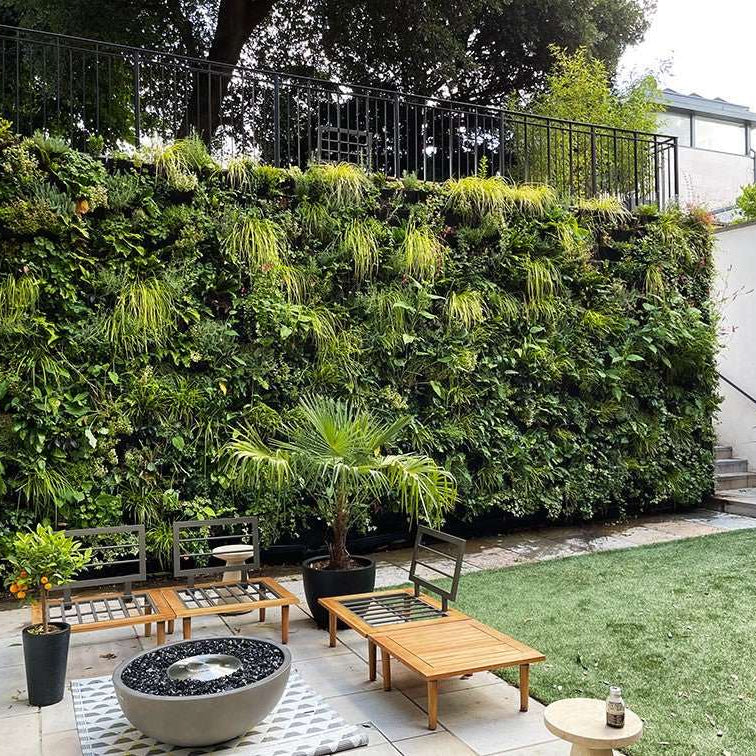



Wind-Resistant Planting Design in Ireland
Wind is not just uncomfortable, it changes how a garden grows.
In exposed Irish gardens, wind reduces plant vigour, dries soil, distorts form, and turns “perfect plant choices” into ongoing maintenance problems. The solution is rarely a single hedge or a shopping list of hardy plants.
The solution is structure: shelter, layering, and planting that is designed to behave well over time.
If you're struggling to ge the best from your garden and want some help start here
Why Windy Gardens Often Feel “Impossible”
Most windy-garden frustration comes from a predictable cycle:
- Plants struggle to establish
- Growth becomes one-sided or stunted
- Leaves scorch and tear
- Soil dries despite rainfall
- Borders never look settled
The real issue is that wind is a site condition, not a plant preference. Wind changes microclimate, soil moisture and exposure. It has to be designed for.
How Wind Behaves in Irish Gardens
Wind is rarely uniform. Even in exposed sites, it moves in patterns:
- Acceleration around corners, sheds, and house gables
- Tunnelling through side passages and between buildings
- Downdrafts off roofs and higher ground
- Salt-laden wind in coastal sites, which behaves differently again
Before choosing plants, the question is:
Where is wind coming from, where does it hit, and where can we create calm pockets?

The Structural Approach to Wind-Resistant Planting
A wind-proof garden is built in layers, not with one heroic hedge.
1) Create shelter first (without making a wall)
Shelter should slow wind and create calmer microclimate, but still allow some air movement. Solid barriers can cause turbulence and downdrafts.
2) Use layered planting, not single lines
Wind breaks are most effective when planting is layered:
- canopy / small trees (where appropriate)
- structural shrub mass
- lower seasonal and ground layers to knit soil surface
This is the same framework used in professional planting design generally, it simply becomes more essential in exposed sites.
If you’d like the broader framework behind this approach, see Planting Design & Garden Structure in Ireland.
Plants for Windy Gardens in Ireland
These are plants that behave well in wind when correctly placed and spaced. Which of them suits your garden depends on how exposed it is and what your soil is like, which is why the placement matters as much as the list.
Structural evergreen backbone
These are used to create bulk, stability and year-round form.
Examples (depending on exposure and soil):
- Griselinia (milder coastal areas)
- Escallonia (coastal-tolerant)
- Pittosporum (sheltered sites / milder areas)
- Elaeagnus (very tolerant, good for exposed conditions)
- Viburnum tinus (where not too exposed)
The key is grouping and repetition, not specimens dotted around.
Tough deciduous structure
Used to soften the evergreen weight and create contrast.
Examples:
- Hazel (Corylus) in informal shelter belts
- Rowan (Sorbus) as a wind-tolerant small tree option
- Amelanchier (where not at the very edge of exposure)
Ground and edge layer
Wind dries soil from the surface up. A stable ground layer reduces moisture loss and improves establishment.
Examples:
- Hardy geraniums (in brighter, calmer pockets)
- Alchemilla (where soil moisture is reasonable)
- Ferns and shade-tolerant ground layers in sheltered lee-side areas
Shelter is built in layers, and the order matters. The outer planting takes the punishment so the inner planting can establish, which means the sequence of what goes in and where is as important as the plant list itself. If your site is exposed and you want that worked out properly, a planting plan sets out the positions and the staging.

Common Mistakes in Windy Gardens
Wind magnifies mistakes quickly. The most common are:
- Planting single rows instead of layered planting
- Using tender, broad-leaved plants in exposed edges
- Planting too sparsely (wind passes through gaps and keeps drying everything)
- Planting too densely (competition + poor establishment)
- Ignoring soil moisture and root establishment
- Believing one fence or wall “solves” wind
A windy garden needs a plan that anticipates maturity, not just how it looks in year one.
Coastal vs Inland Exposure
Coastal wind often includes salt, which adds another constraint: leaf scorch and chronic stress.
In these sites, structure becomes even more important:
- shelter pockets
- salt-tolerant outer layer
- more protected inner planting palette
If you’re on the coast, it’s rarely about “which plant”.
It’s about where it sits in the shelter structure.
When Wind Requires Layout Changes
Sometimes wind issues are made worse by how the garden is arranged: long corridors, exposed patios, straight-through gaps.
In those cases, planting alone can’t do all the work. Small layout moves can create calmer space that planting can then stabilise.
If the garden needs more than planting alone, you can see how I approach structured change on the Garden Design Services page.
Getting the Direction Right Before You Plant
If your garden is exposed, it’s worth getting the direction right before you invest in planting that struggles for years.
An Online Garden Consultation allows us to assess:
- prevailing wind direction and exposure
- soil moisture and establishment issues
- where shelter should be created
- what structure is realistic for your site
For Cork-based gardens where an on-site assessment is appropriate:
On-site Garden Consultancy (Cork only)
Planting design for windy and exposed gardens is part of a wider planting framework, see Planting Design & Garden Structure in Ireland for the full structural approach.
Frequently Asked Questions About Windy Gardens in Ireland
Can a garden be made completely windproof?
No. The aim is to reduce wind speed and create calmer microclimates, not eliminate airflow entirely. Layered planting is more effective than solid barriers.
Is a single hedge enough to stop wind?
Rarely. A single line of planting often creates turbulence. Layered shelter planting performs better and looks more natural.
Are coastal gardens different?
Yes. Salt exposure adds stress. Outer layers must tolerate wind and salt, with more delicate planting positioned in sheltered pockets.
Why do plants struggle even after planting wind-tolerant species?
Wind affects soil moisture and root establishment. Structure and spacing are often more important than species alone.
Still unsure?
Most garden projects begin with a conversation.
If you're not certain which route suits your garden, tell me about it and I’ll recommend the right next step.