

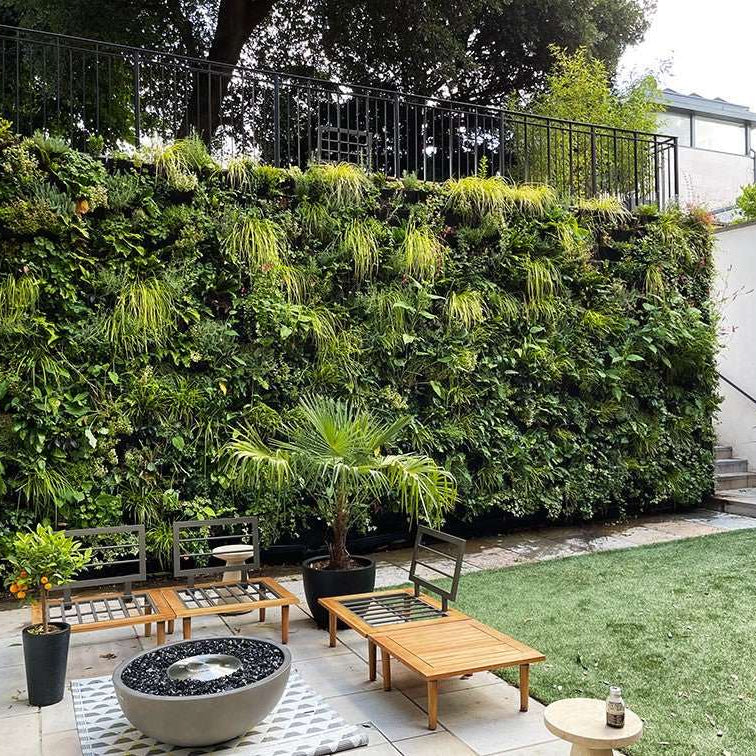



By Peter Dowdall - The Irish Gardener - Beyond Gardens
A tree count tells us how many have been planted. It doesn’t tell us whether those trees will cool a street, manage rainwater, support wildlife or thrive in the conditions they face.
“Right plant, right place” is a familiar gardening principle. Recent tree research gives us reason to ask a third question: what is this planting meant to do?
A scheme designed to provide shade may need different plants from one intended to support wildlife, manage rainwater or create shelter. The plant, the place and the purpose all shape what can be achieved. The wider role of planting in supporting biodiversity in Ireland is one example of why purpose matters.
Studies from different parts of Europe have explored these questions at different scales. They are not directly comparable, and their findings cannot simply be transferred to Ireland. But each shows, in its own way, that planting choices matter.
What is happening at the leaf?
A Trinity College Dublin botany thesis by Finn Kelly McHugh explored how leaf characteristics, including leaf size and stomatal traits, interact with environmental conditions to influence cooling potential.
Plants lose water through tiny pores in their leaves called stomata. As water changes from liquid to vapour, the process requires energy. It draws heat from the leaf and its surroundings, contributing to cooling through transpiration.
The rate of transpiration depends on both the plant’s traits and the conditions around it. Leaf size and the size and number of stomata affect how a leaf exchanges heat and water vapour. Wind, temperature and humidity also matter. When the air is humid, the difference between moisture inside the leaf and in the surrounding air is smaller, so transpiration is less strongly driven.
McHugh’s thesis uses a model to examine how these traits and conditions interact. Trait-based modelling of this kind is an emerging approach, while existing physical and biological research supports the idea that leaf traits contribute to differences between species. The thesis points to an area for further investigation; it is not a tested guide to choosing trees for a real street. Cooling there also depends on canopy size, shade, water availability and growing conditions.
These processes are part of the wider relationship between horticulture and climate resilience, but their effects depend on the planting and the place.
What can different trees contribute?
A separate study by the Royal Horticultural Society and its research partner, Frank P. Matthews, examined the environmental performance of garden trees. The peer-reviewed paper reports on an outdoor experiment involving nine tree types monitored over two summers.
The researchers found differences in transpiration and estimated cooling potential. For example, cherry ‘Fugenzo’ continued transpiring at high temperatures when water was available. Holly, cypress and pear showed relatively high transpirational cooling in relation to canopy size.
The trees were grown in containers, and soil moisture was maintained to avoid water stress. The researchers note that further work is needed in different soils and with trees growing in the ground. The results show that tree characteristics can influence performance, while reminding us that a tree’s ability to deliver depends on the conditions it is given.
What happens across a landscape?
A study of the Sorraia river basin in Portugal modelled different approaches to upstream afforestation. Its scenarios produced different outcomes for sediment, water quality and economic value. The authors emphasise that the results depend on local conditions, land use and management.
The Portuguese landscape and climate differ from Ireland’s. The value of the study is not that it gives us a planting prescription for Ireland, but that it shows how land-use choices can affect several outcomes, sometimes with trade-offs. Counting trees or hectares alone would not tell decision-makers what the model projected for water, soil, farming or the wider economy.
Why does Ireland need its own evidence?
Together, these studies point to a gap between knowing that planting can contribute to environmental outcomes and knowing what to plant, where and for what purpose in a particular place.
Ireland cannot assume that results from a Portuguese river basin, a leaf-level model or a controlled tree trial will translate directly to an Irish street, park or landscape. Soil, climate, water, available space, surrounding land uses and ongoing care all influence what planting can achieve.
We need Irish evidence to help choose plants for specific roles and understand how they perform in local conditions. Cork’s St Patrick’s Street greening pilot is one local example of planting becoming part of the design of a public street. It also raises the practical questions: what outcomes are intended, what conditions will shape them, and how will we know what the planting delivers?
Public bodies, communities and funders have to decide where to invest, what outcomes to expect and how to assess progress. Irish evidence can help them make those decisions with greater confidence. It can also show when a planting scheme is working, where it needs adjustment and who is benefiting.
For each greening project, that means being clear from the outset about the problem, the people affected and the outcomes being pursued. It means choosing planting that can contribute to those outcomes, providing the conditions it needs and checking what happens over time.
From principle to practice
“Right plant, right place, right purpose” is a useful way to think about planting. The next step is to put that principle into practice: define the purpose, understand the place, choose planting that can contribute, provide the conditions it needs, and check what happens over time.
That is the practical challenge explored in Beyond Gardens: From Why to How: connecting intended outcomes with horticultural knowledge, suitable planting, delivery and measurement.
Through Beyond Gardens, I can help those planning and delivering greening projects connect horticultural knowledge with clear outcomes, informed planting choices and ways to measure success.
When we announce how many trees have been planted, we should also be able to explain why they were chosen, what they were intended to achieve and how we will know whether they are succeeding.
Sources
-
McHugh, Finn Kelly (2026). Leaf trait interactions shape the cooling potential of urban vegetation: A mechanistic model of leaf-air heat exchange for nature-based urban heat mitigation. Botany thesis, Trinity College Dublin. Author-supplied thesis.
-
Larsen, E. K. et al. (2025). Impact of environmental drivers on ecosystem service-delivery of small garden trees in a temperate climate. Read the paper.
-
Kok, S. et al. (2026). Ecosystem service trade-offs of upstream afforestation: an integrated hydrological-economic assessment in the Sorraia basin, Portugal. Read the paper.